May 2026 Newsletter
The brain doesn’t operate in isolation – it is in constant conversation with the immune system. And increasingly, scientists are learning that this conversation shapes how serotonin behaves, how antidepressants work, and why some people’s depression doesn’t respond to treatment at all.
Science in Sixty Seconds
The Immune Switch Behind Depression
As we explored in our last issue, serotonin is far more than a mood dial. It’s a precision signaling molecule distributed across 15 receptor subtypes, embedded in circuits that govern emotion, memory, cognition, and even gut function.
What’s less widely appreciated is that serotonin doesn’t work in a vacuum. The immune system has a direct hand in shaping how much serotonin your brain has to work with and how well it functions when it gets there.
Serotonin-Neuroinflammation Connection
Your brain has its own resident immune cells, called microglia. Think of them as the brain’s maintenance crew – they patrol for damage, clear debris, and respond to threats. Under normal conditions, they’re mostly quiet, supporting healthy brain function. But when the brain detects stress, infection, or injury, microglia activate and release inflammatory signaling molecules called cytokines (See Figure 1). These can be proteins like interleukin-6 (IL-6) and interleukin-1β (IL-1β), and tumor necrosis factor-alpha (TNF-α).
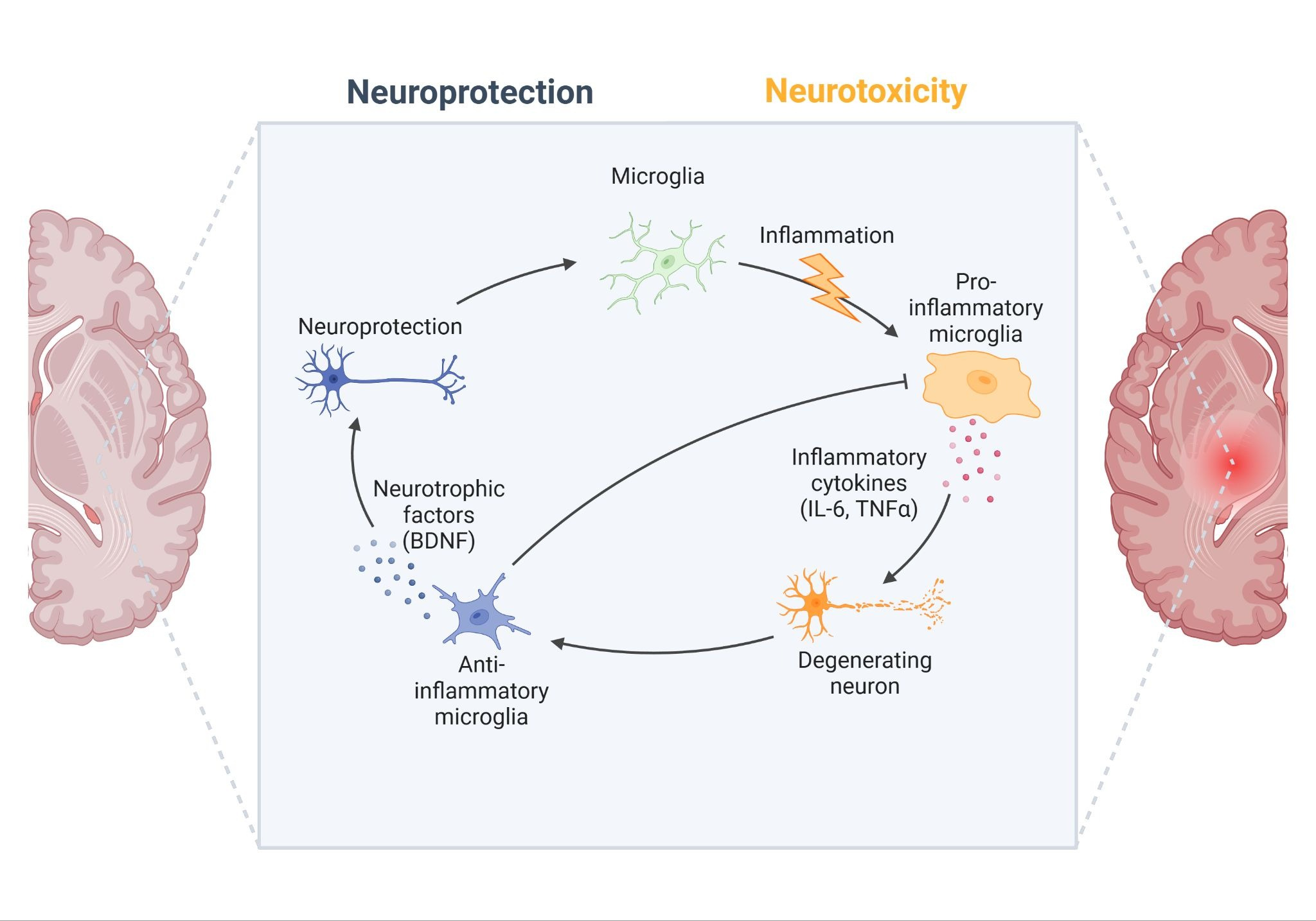
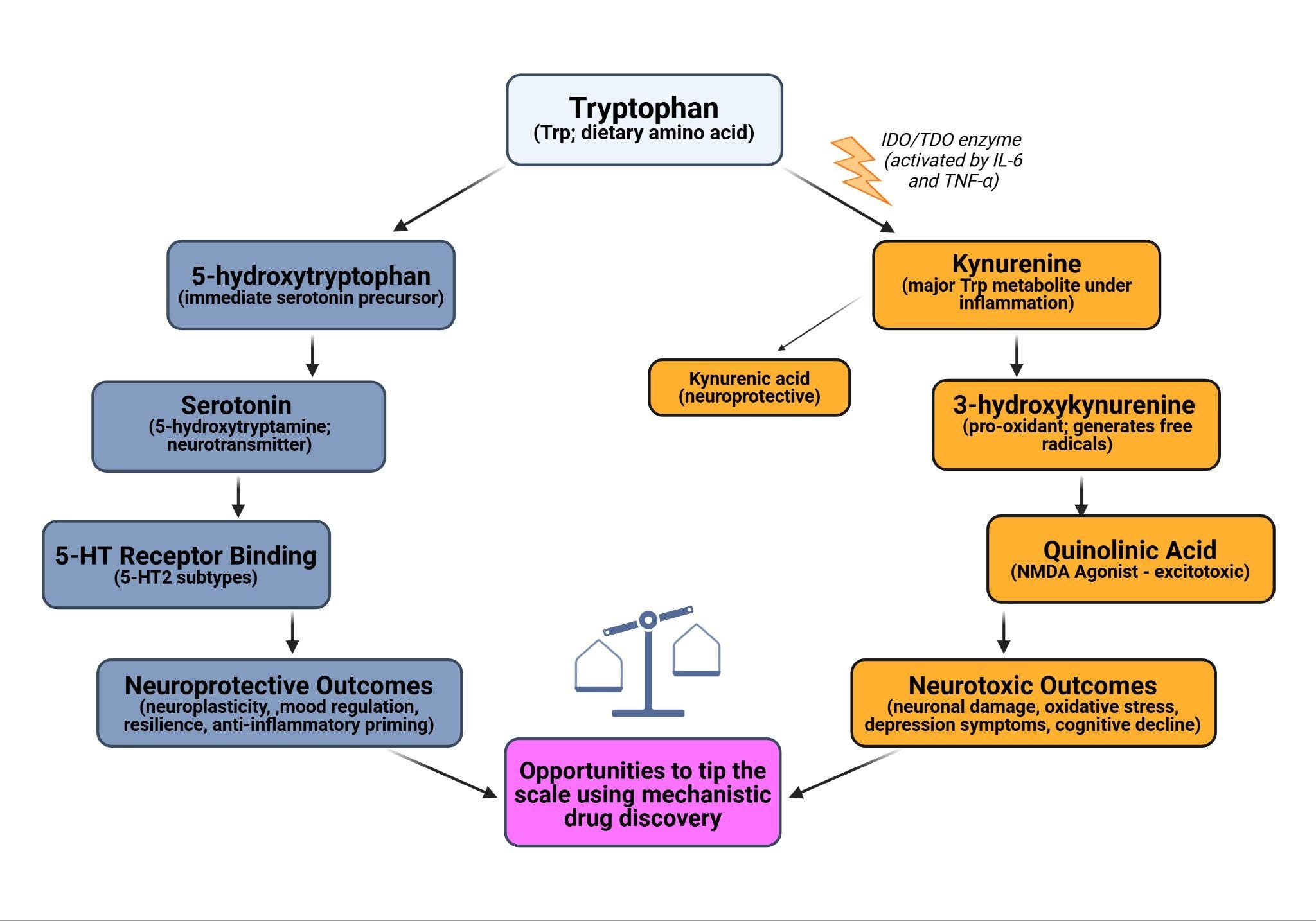
Those same cytokines can directly interact with serotonin. They do this in part through a pathway that diverts the amino acid tryptophan, which is the precursor the brain needs to make serotonin. Tryptophan gets steered away from the serotonin production pathway and toward a different route called the kynurenine pathway (Savitz, 2020). The result? Less serotonin available in the brain, and more other unneeded metabolites, some of which are themselves neurotoxic (See Figure 2).
The relationship runs both ways. Serotonin doesn’t just receive signals — it sends them, including to immune cells. Peripheral immune cells, including T cells and macrophages, express serotonin receptors and respond to serotonin as a signaling molecule (Wu et al. 2019). Different types of inflammation can alter 5-HT2A receptor signaling and function in various brain regions (Couch et al. 2013). Further, researchers have demonstrated that even the smallest amount of serotonergic psychedelic, DOI, can produce extremely potent anti-inflammatory effects across a variety of models, including different models of human inflammatory disease (Nichols, 2022)
The SSRI Paradox
We know that selective serotonin reuptake inhibitors (SSRIs) are the most commonly prescribed antidepressants, but only work for roughly half of patients. Many scientists are working to figure out what drives the unresponsiveness.
One emerging hypothesis is that some patients’ depression might be driven by immune dysregulation, which explains why increasing serotonin availability at the synapse doesn’t address the upstream problem. The immune system could be simultaneously depleting the supply and degrading signaling. Consistent with this, SSRIs have been found to have modest anti-inflammatory effects in some studies (Bleibel et al. 2025), which may partly explain why they help at all in inflammatory contexts – even though they weren’t designed with this mechanism in mind.
Prophylactic Serotonergic Treatments
Building on evidence from other labs (Flanagan et al. 2019a, Flanagan et al. 2019b, Nau et al. 2015), a recent study in BMC Neuroscience aimed to understand whether a prophylactic psychedelic dose could prime the brain to resist inflammation and identify the specific mechanisms involved (Fiorillo & Gonzalez-Maeso, 2026).
Researchers gave mice a single dose of DOI, 24 hours before triggering a neuroinflammatory response. They found that the DOI pretreatment significantly reduced elevations of two key pro-inflammatory cytokines, IL-6 and TNF-α, in the hippocampus – the brain region central to memory, mood, and stress regulation. Meaningful correlations between depressive-behavior and cytokines were detected, reinforcing the idea that cytokine balance in the brain is linked to mood and depression symptoms.
They also found that mice without 5-HT2A receptors showed exaggerated cytokine responses to the triggered inflammation, and the anti-inflammatory effects of DOI were only partially mediated by this receptor.
Together, these findings suggest that next-generation therapeutics could prime neural-immune interactions to confer long-lasting protection against neuroinflammatory insults. If inflammation is reshaping the very receptor landscape we’re targeting, then a drug’s pharmacology in a “healthy” brain may look quite different from its pharmacology in an inflamed one.
Why this matters for Xylo Bio
At Xylo Bio, understanding the context in which our compounds operate is central to how we design them. Our screening platform is built on mechanistic neuroscience, asking both “what does a compound do when it gets to its receptor, and in what cellular environment does it happen in?”
Our development candidate targets the 5-HT2A receptor with a selective pharmacological profile specifically designed to produce favorable signaling outcomes while avoiding the off-target effects that have limited classical serotonergic compounds. The serotonin story isn’t just about neurons and receptors. It’s about the whole environment those neurons live in.
XYLO BIO UPDATES:
Scientific Leadership
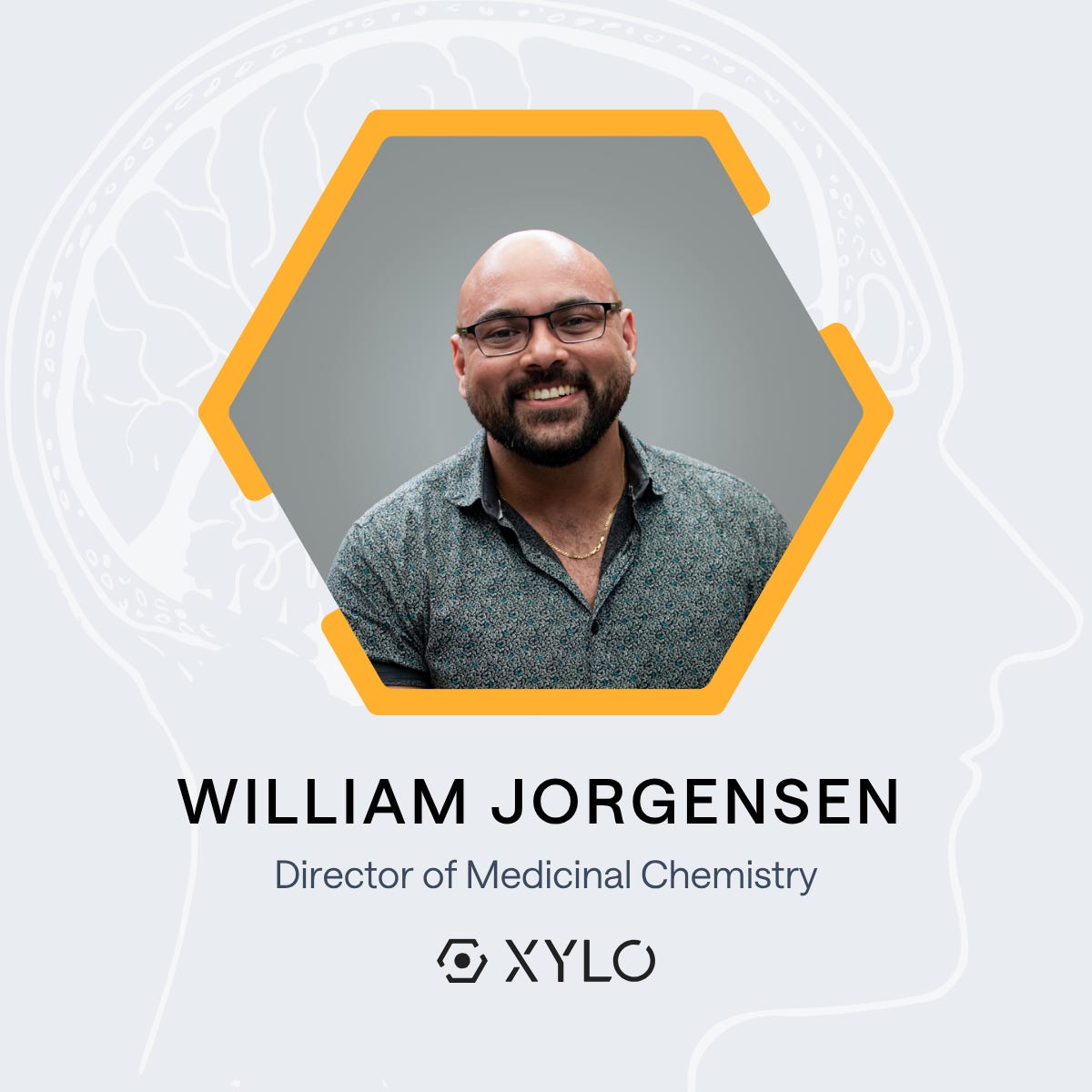
We want to highlight the hard work our chemistry team, starting with Director of Medicinal Chemistry, Dr. William Jorgensen:
- Dr. Jorgensen received his PhD at University of Sydney under Prof. Michael Kassiou where he developed brain-penetrant oxytocin receptor agonists. He's been with Xylo since the beginning in 2021, and has spent almost 5 years working on rational drug design with the company. Read more about his work with Xylo here.
Collaborations and Thought Leadership
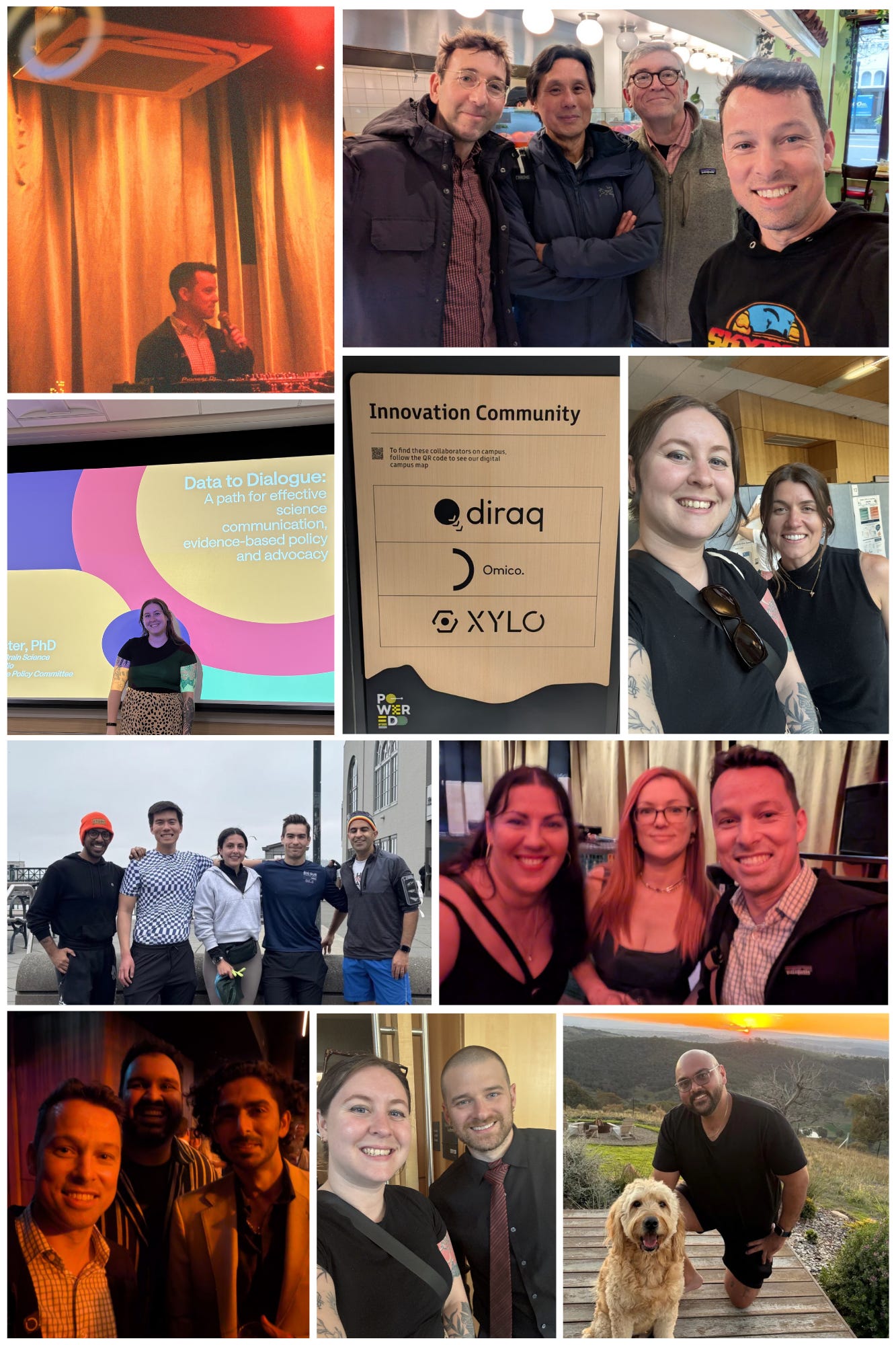
- Samantha Rector (VP of Business Development) presented on the “Innovators, Investors, Strategics Relationships” Panel at the Octane Neurotech Forum. You can watch the discussion online here!
- Samantha Rector co-led a workshop focused on neuroethics, investor-founder frameworks and neurotherapeutics at the Asilomar for the Brain and Mind.
- Dr. Alaina Jaster (Head of Comms) gave a keynote presentation on science communication for the MUSC Beyond the Lab event.
- Dr. Sam Banister (CSO) participated in the Blackbird Sunrise Series AFTER DARK event, discussing what it takes to build a business.
- Dr. Sam Banister (CSO) visited the Xylo Bio labs in Sydney and caught up with the Research & Development team.
In Xylo Bio’s recent Targeted Neuro Talks, Dr. Sam Banister chatted about molecular dynamics, drug discovery and more with Dr. Gumpper:
Coming Up:
Find members of the Xylo Bio team traveling around the globe in the coming months:
- Endless Frontier Labs (New York City, New York, May 6 - 8) - Josh Ismin (CEO) and Dr. Sam Banister (CSO) will be attending an event for the Endless Frontiers Program.
- UW-Madison Commencement (Madison, Wisconsin, May 7) - Samantha Rector will be giving the Keynote for the UW-Madison School of Pharmacy Graduate Studies Program Commencement.
- ASPET Annual Meeting (Minneapolis, Minnesota, May 17- 20) - Dr. Sam Banister will be presenting on a panel titled “Neural, Immune, and Behavioral Interactions of Psychedelics and Stress”Find members of the Xylo Bio team traveling around the globe in the coming months:
Photos
RESEARCH UPDATES: Science Shaping the Future of Neurotherapeutics
This month’s emerging literature demonstrates the same principles driving Xylo’s strategy: mechanism-guided design, rigorous biological investigation and clinically scalable innovation.
Preclinical Research
Preclinical Research
- Serotonin receptor activation of D2 neurons reduce reinforcing effects | This study shows that dopamine and serotonin have opposing effects on the same brain cells involved in reward, with dopamine suppressing and serotonin activating dopamine D2 medium spiny neurons in the striatum. By exciting these neurons, serotonin can dampen the rewarding effects of cocaine, revealing a circuit-level mechanism for how these two neurotransmitters balance motivation and reward-related behavior. Nat Commun.
- 5-HT1 receptor agonists have differential effects on brain activity in MRI | This study used brain imaging in mice to compare how different serotonin 5-HT1 receptor targeting drugs affect activity across the brain. A selective 5-HT1A receptor agonist broadly reduced brain activity, while a broader-acting compound (FPT) increased overall brain activity in a more complex, dose-dependent way, likely due to its action at multiple receptor subtypes. Pharmacol Res Perspect.
- Ketamine’s antidepressant effects found to be partially through mu opioid receptors | Using RNA sequencing, authors identified a specific class of inhibitory neurons (Sst+ interneurons) in the prefrontal cortex that are implicated as antidepressant targets. They found that ketamine reverses stress-induced changes in synaptic function, partially through mu opioid receptors expressed on these Sst+ neurons. Cell.
- MDMA analogue produces a safer preclinical profile while retaining positive outcomes | Researchers aimed to identify whether MDMA isomers and analogues produce safer profiles than MDMA. They found that R-MDDMA, a methylated analogue, avoids several concerning effects of MDMA like serotonin release and 5-HT2B receptor activation while still promoting neuroplasticity, enhanced fear extinction, and produced sustained antidepressant-like effects. ACS Chem Neurosci.
- TrkB signaling influences microglia activation in depression-like phenotypes | This study shows that TrkB signaling in neurons promotes the release of a molecule called soluble CD22, which helps suppress overactive microglia and reduce depression-like behaviors. It also finds that this pathway is important for the sustained (long-term) antidepressant effects of drugs like ketamine, linking neuron–immune interactions to mood regulation and treatment response. Mol. Psychiatry.
Clinical Research
- Magnetic seizure therapy shows improved safety profile compared to ECT | This large randomized clinical trial (N=236) found that magnetic seizure therapy (MST) is about as effective as electroconvulsive therapy (ECT) for treating severe depression, with similar rates of symptom improvement. However, MST showed a more favorable cognitive safety profile, particularly preserving memory, suggesting it may offer a less impairing alternative to standard ECT. Lancet Psychiatry.
- Day-dreaming is found to have distinct EEG signatures | To understand the continuity of sleep and wake experiences, researchers assessed if dream-like experiences can occur even while people are awake (N=92). They found these mental states form distinct patterns that are not strictly tied to being asleep or awake. One key signature was increased slow-wave (low-frequency) activity in posterior brain regions, a pattern typically seen during sleep, even though participants were awake – indicating a localized, “sleep-like” state in the cortex associated with dream-like experiences. Cell Reports.
- Psychedelics produce complex changes in brain organization | In the most comprehensive psychedelic brain study to-date, this meta-analysis (N=267) combined data across multiple psychedelic drugs and found a shared “brain signature” characterized by increased connectivity between higher-order cognitive networks and sensory/motor systems. Rather than simply disrupting brain organization, psychedelics appear to reconfigure communication across networks and engage subcortical regions, allowing more flexible information flow in the brain. Nat. Med.
- Several genes show sex-biased activity across brain regions | Using large-scale single-cell analysis, researchers analyzed gene expression across individual brain cells from 30 human donors and found that sex differences in the brain are subtle but widespread at the molecular level. While sex explains only a small portion of overall gene expression variation, thousands of genes – especially in certain cell types like glia – show sex-biased activity, which may help explain why many neurological and psychiatric disorders differ between males and females. Science.
- Sex as a biological variable is understudied across NIH-funded research | This study analyzed 574 NIH-funded research articles and found that while most studies include both male and female subjects, fewer than half actually analyze results by sex, revealing a gap between policy and practice. It also found that sex-based analyses were more common in human studies and in papers led by women authors, suggesting that both study type and researcher demographics influence how sex differences are considered. Commun. Med.
Editorials and Reviews
- Further expanding the addiction recovery research agenda: Institutions, populations and workforce | This article argues that addiction recovery research should expand beyond treatment outcomes to better study how recovery unfolds across key settings and populations. It specifically calls for more focus on recovery during emerging adulthood, recovery-support institutions, researchers with lived experience, and justice-involved populations. Addiction.
- The behavior biopsy: Interpreting animal behavior as embodied, situated, and hierarchical | This perspective article argues that neuroscience should move beyond simplified behavioral tests and instead study behavior as a complex, whole-organism phenomenon shaped by the body and environment. It proposes a “behavior biopsy” approach that captures richer, real-world behavioral data to better link brain activity to meaningful actions. Overall, the work highlights the need for more naturalistic and integrative methods to understand brain–behavior relationships. Curr. Opin. Neurobiol.
- Serotonergic psychedelics as epigenetic modulators: A paradigm shift in Alzheimer’s disease therapeutics | Alzheimer’s disease involves multiple pathological processes, and growing evidence suggests that epigenetic dysregulation plays a key role by altering gene expression in the brain. This review highlights that serotonergic psychedelics acting at 5-HT2A receptors can promote neuroplasticity and modify epigenetic markers, such as DNA methylation and histone changes. It proposes that targeting 5-HT2A receptors may help counteract epigenetic abnormalities contributing to Alzheimer’s disease progression. Neurosci. Biobehav. Rev.
- Adolescent Psychedelic-Assisted Therapy Addressing Ethical and Clinical Challenges Through a Systems-Psychological Lens | This review examines ethical considerations for psychedelic-assisted therapy in adolescents, noting that developing brains may respond differently than adults. It argues that psychedelics’ pro-plasticity effects may create both therapeutic opportunities and unique risks in this population, requiring careful ethical consideration and a systems-level approach that includes family, environment, and support structures. Acta Psychedel.
- Clinical staging and profiling of affective disorders | This review proposes that affective disorders should be understood as conditions that evolve through distinct clinical stages, rather than as static diagnoses. It argues that staging, combined with detailed clinical profiling, can improve prediction of outcomes, enable more personalized treatment selection, and support earlier intervention to prevent progression or recurrence across the lifespan. Neuropsychopharmacol.
Clinical Trial Registrations
Below we highlight some of the newer clinical trial registrations via clinicaltrials.gov:
Alpha phase-locked auditory stimulation | Major Depressive Disorder and Insomnia (N=25) | Auditory Stimulation for Insomnia and Depression | Sponsor: Wake Forest University Health Sciences | NCT07553364
Dextromethorphan-bupropion (DXM/BUP) | Major Depressive Disorder (N=30) | Dextromethorphan-Bupropion on Striatal Activity in Adults With Major Depressive Disorder | Sponsor: Roger McIntyre | NCT07523048
Intermittent theta burst stimulation (iTBS) | Treatment-Resistant Depression (N=80) | Early Brainwave Biomarkers for Personalized Neuromodulation in Treatment-resistant Depression | Sponsor: Stanford University | NCT07528157
Jump back to:
- Science in Sixty Seconds – Exploring the last year of neurotherapeutics
- Xylo Bio Updates – Company news, progress, and highlights
- Research Updates – Summaries of recent studies shaping the field
Thanks for reading Xylo Bio’s Neuroscience Newsletter! Subscribe to stay informed.

.webp)